
Table of Contents

Introduction: Embracing a New Mindset
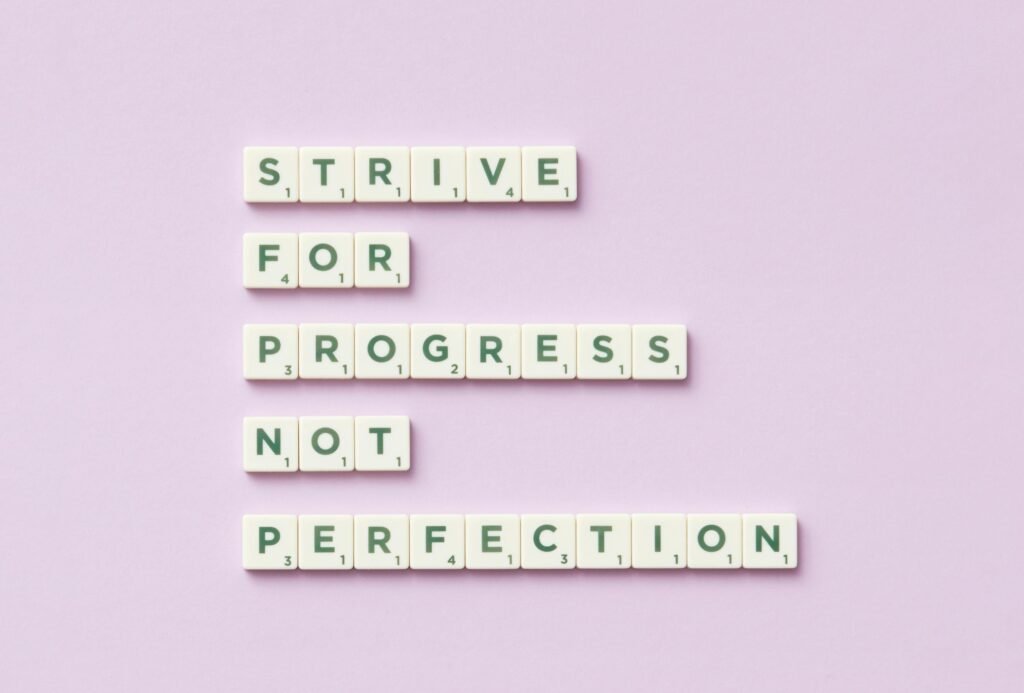
In today’s fast-paced world, the concept of ‘progress over perfection’ has emerged as a vital mindset for personal and professional development. As individuals navigate through the complexities of life, they often encounter the insatiable pursuit of perfection, which can lead to frustration and even burnout. The relentless chase for flawlessness drowns the essence of advancement and stymies creativity. Therefore, embracing the notion of progress can serve as a more sustainable alternative.
Striving for perfection often creates unrealistic expectations, leading many to become paralyzed by the fear of failure. When individuals tie their self-worth to achieving perfect outcomes, they may forgo opportunities for learning and growth. Instead, by focusing on progress, one can cultivate resilience and adaptability, embracing setbacks as valuable learning experiences. This shift of mindset allows for incremental improvements, which are often more achievable and rewarding.
Moreover, adopting ‘progress over perfection’ fosters a more positive atmosphere in personal relationships and workplace dynamics. When teams prioritize progress, they cultivate a collaborative environment where innovative ideas can flourish. This emphasis on development promotes camaraderie among colleagues, as they recognize and celebrate each other’s small victories. Ultimately, this approach encourages a culture of continuous improvement rather than a singular focus on supreme excellence.
In essence, aligning one’s objectives with the principle of progress rather than perfection releases the burden of unattainable standards. Instead of being fixated on precision, individuals can acknowledge their growth and the steps they take toward their goals, no matter how small they may seem. By doing so, they pave the way for a healthier, more effective approach to their personal and professional journeys.
Understanding the Perfectionism Trap
Perfectionism is often characterized as a relentless pursuit of flawlessness, typically accompanied by excessively high standards and self-criticism. It manifests in various forms, influencing both personal and professional domains. Those who identify as perfectionists often grapple with an overwhelming fear of failure, which can paralyze decision-making and prevent meaningful progress.
The psychological effects of perfectionism are profound. Perfectionists frequently experience anxiety, stress, and chronic dissatisfaction. This results from the constant pressure to perform at an exceptionally high level, leading to a perpetual sense of inadequacy when they fall short of their expectations. In effect, the desire for perfection complicates their ability to celebrate achievements, fostering a cycle of self-doubt and disappointment.
Common characteristics of perfectionists extend beyond fear of failure; they often impose unreasonably high self-expectations. This can result in an all-or-nothing mindset, where any minor setback or imperfection is viewed as complete failure. Such attitudes not only affect individual mindset but also alter the dynamics in interpersonal relationships and workplace environments. Perfectionists may struggle with delegation, harboring the belief that no one can meet their standards, which can stifle teamwork and innovation.
Furthermore, the battle against perfectionism can lead to procrastination, as individuals may delay starting a task for fear their efforts won’t yield perfect results. This behavior often results in increased stress levels and missed opportunities for growth. To navigate the perfectionism trap, it is crucial for individuals to reframe their aspirations and embrace progress over perfection, recognizing that incremental improvements are a vital part of personal development.
The Benefits of Choosing Progress
Opting for progress over perfection is a powerful mindset that can yield numerous advantages in both personal and professional spheres. One of the primary benefits of prioritizing progress is the enhanced motivation that often accompanies the celebration of small wins. When individuals recognize and acknowledge incremental achievements, they are more likely to sustain their enthusiasm and commitment towards their overarching goals. This fosters a positive feedback loop that encourages continuous effort and growth.
Moreover, embracing progress cultivates resilience. Individuals who fixate on achieving perfection may see obstacles as insurmountable failures. In contrast, those focused on progress view challenges and setbacks as opportunities for learning and development. This can result in a more adaptable attitude, enabling individuals to recalibrate their approaches when facing difficulties, thereby enhancing their ability to navigate life’s uncertainties.
Additionally, choosing progress helps to foster a positive mindset. This perspective shifts the focus from an unattainable ideal to achievable milestones, reducing stress and anxiety associated with perfectionism. A positive mindset allows individuals to appreciate their journey, enhancing their overall satisfaction. As they celebrate each step forward, they often develop greater self-efficacy and confidence in their abilities.
Furthermore, this shift towards valuing progress can lead to sustained success across various aspects of life, including personal development, career advancement, and relationships. By encouraging a culture of gradual improvement, individuals not only enhance their skill sets but also strengthen their connections with others. In essence, the benefits of choosing progress over perfection form a solid foundation for long-term fulfillment and achievement.
Real-Life Examples: Progress vs Perfection
One illustrative example of choosing progress over perfection can be seen in the case of Thomas Edison, the famed inventor. Edison’s journey to invent the electric light bulb exemplifies how striving for progress rather than an unattainable ideal can yield groundbreaking results. Edison’s iterative process involved thousands of unsuccessful attempts before finally arriving at a functional design. Instead of becoming discouraged by his failures, he viewed them as stepping stones toward improvement. This approach not only led to the invention of the light bulb but also paved the way for modern electric innovation, demonstrating how embracing progress can result in monumental achievements.
Similarly, in the realm of technology, the development of software products often embodies the ethos of progress over perfection. Companies like Facebook have repeatedly adopted a philosophy of rapid iteration. Rather than waiting to release a flawless product, Facebook launched its platform early, allowing user feedback to inform improvements. This method, referred to as a Minimum Viable Product (MVP), has enabled Facebook to refine its features dynamically based on real user experiences, leading to significant growth and sustained engagement.
In the personal realm, many individuals find satisfaction through the practice of ‘good enough’ in daily life decisions. For instance, a busy working parent may opt for healthy, albeit simple meals rather than striving for perfect culinary creations. This mindset fosters a sense of accomplishment and well-being, illustrating that prioritizing progress allows for a more balanced and fulfilling life.
These examples underscore the profound impact that choosing progress over perfection can have, facilitating creativity, innovation, and personal satisfaction in both individual and collective endeavors. The pursuit of progress encourages an open-minded approach that embraces mistakes as part of the growth journey, ultimately leading to greater achievements across various fields.
Strategies for Embracing Progress in Daily Life
Adopting a progress-over-perfection mindset can significantly enhance one’s overall well-being and productivity. Here are several practical strategies that can help individuals incorporate this mindset into their daily lives.
First and foremost, setting realistic and attainable goals is crucial. Break larger objectives into smaller, manageable tasks to avoid feeling overwhelmed. Instead of striving for perfection, aim for incremental progress. For instance, if the goal is to develop a new skill, dedicate a specific amount of time each day to practice, celebrating each small achievement along the way, rather than focusing solely on the end result.
Another essential strategy is to practice self-compassion. Recognize that everyone makes mistakes and encounters setbacks; these experiences are a natural part of growth. When faced with challenges, instead of berating oneself for perceived failures, adopt a gentler inner dialogue. Acknowledge what went well, identify what can be improved, and give oneself grace to learn and evolve.
Additionally, reframing negative thoughts is a powerful tool in shifting one’s perspective. When negative self-talk arises, counter it by focusing on the learning opportunities presented by obstacles. For example, instead of thinking, “I failed at this task,” try rephrasing it to, “I learned valuable lessons that will help me improve next time.” This shift not only encourages a more positive outlook but also reinforces the importance of progress.
Lastly, incorporating mindfulness practices such as meditation or journaling can significantly improve one’s ability to focus on progress over perfection. These practices provide the mental space to reflect on daily experiences and recognize growth, fostering a deeper appreciation for the journey itself. By implementing these strategies consistently, individuals can cultivate a resilient mindset that embraces progress, ultimately leading to a more fulfilling life.
Overcoming Barriers to Progress
In the pursuit of advancements in personal and professional spheres, many individuals encounter obstacles that hinder progress. Recognizing these barriers is crucial in navigating the journey towards embracing progress over perfection. One primary hindrance lies in the realm of fear. Fear of failure, fear of judgment, and even fear of success can paralyze individuals, preventing them from taking necessary steps forward. Addressing these fears involves acknowledging them and reframing one’s mindset. By understanding that mistakes are an integral part of growth, individuals can gradually reduce their fears, allowing them to take constructive risks.
Negative self-talk poses another significant barrier to progress. Often, individuals are their harshest critics, continuously undermining their abilities and potential. This internal dialogue can create an environment conducive to stagnation. To counteract this, it is beneficial to practice self-compassion and positive affirmation. Regularly reflecting on one’s accomplishments, no matter how small, can foster a more supportive inner voice. Strategies such as journaling or engaging with motivational literature can also assist in creating a positive mindset that prioritizes progress.
Societal pressures may manifest as unrealistic expectations or comparison to others, further complicating the journey of progress. In a world that often glorifies perfectionism, individuals might feel compelled to meet these arbitrary standards. Recognizing that each person’s journey is unique can alleviate these pressures. Embracing the concept of progress as a series of incremental improvements is essential. Surrounding oneself with supportive communities that value growth and encourage risk-taking can also be instrumental in overcoming societal barriers.
Overcoming these common barriers—fear, negative self-talk, and societal pressures—enables individuals to foster a mindset that prioritizes progress over perfection, paving the way for meaningful achievements and personal growth.
Cultivating a Growth Mindset
A growth mindset is a psychological framework that allows individuals to view challenges and setbacks as opportunities for learning and development. This concept, popularized by psychologist Carol Dweck, emphasizes the belief that abilities and intelligence can be developed through dedication and hard work. In contrast to a fixed mindset, where one might see their traits as immutable, a growth mindset aligns seamlessly with the philosophy of progress over perfection. It encourages embracing imperfections as stepping stones on the path toward growth.
To cultivate a growth mindset, it is essential to prioritize persistence in the face of difficulties. Rather than becoming easily discouraged by obstacles, individuals adopting this perspective view challenges as opportunities to enhance their skills and knowledge. This requires a re-evaluation of one’s relationship with failure—rather than fearing it, individuals should understand that each setback provides valuable lessons that inform future endeavors. Learning from failures fosters resilience and reinforces the notion that progress is more important than achieving perfection.
Another crucial aspect of developing a growth mindset is to value effort over inherent talent. Individuals should focus on the processes that lead to success, recognizing that diligence, perseverance, and a willingness to learn are pivotal to achieving goals. Setting realistic and attainable goals encourages individuals to track their progress and fosters a sense of accomplishment as they move forward, thus reinforcing their growth mindset. Additionally, surrounding oneself with supportive peers who also embrace this mentality can further enhance one’s growth journey.
Setting SMART Goals for Progress
Setting goals effectively is crucial for personal and professional development. One of the most widely accepted frameworks for goal-setting is the SMART criteria, which ensure that your objectives are meaningful and attainable. SMART stands for Specific, Measurable, Achievable, Relevant, and Time-bound.
To begin with, a Specific goal precisely defines what you want to accomplish. Instead of saying, “I want to get fit,” you might articulate your goal as, “I will exercise for 30 minutes, five days a week.” This clarity helps in understanding exactly what actions are required to achieve the desired progress.
Next, having Measurable goals allows you to track your progress. In the previous example, measuring can be done by tracking the number of days you successfully complete your workouts. This quantifiable aspect not only motivates but also holds you accountable.
Achievable goals are those that are realistic and attainable given your circumstances. Setting overly ambitious targets can lead to disappointment. Thus, it is advisable to assess your resources and capabilities when defining what is achievable. Aiming to walk 10,000 steps a day may seem too much for a beginner, but starting with 5,000 steps enables steady progress.
Furthermore, your goals should be Relevant to your overall objectives. Ensuring that each goal aligns with your long-term aspirations will maintain your motivation. For instance, if your overarching aim is to lead a healthier lifestyle, a goal to reduce sugar intake is relevant.
Lastly, having Time-bound goals introduces a deadline that helps maintain momentum. A goal set for a specific timeframe creates a sense of urgency and encourages focused effort. For example, aiming to complete a project by the end of the month fosters a constructive approach to time management.
By utilizing the SMART framework, individuals can break down larger tasks into manageable steps. This approach fosters continuous progress rather than the pursuit of unattainable perfection, thus creating a more satisfying journey towards personal and professional growth.
Conclusion: Commit to Progress This Year
As we reflect on the journey ahead, it is crucial to recognize the value of prioritizing progress over perfection. Embracing this mindset can be transformative, not only in our personal lives but also within our professional environments. By choosing to focus on progress, we open ourselves to a spectrum of possibilities for growth and development. Perfection often leads to stagnation, instilling fear of failure and inhibiting risk-taking, which are essential components of any successful endeavor.
Moreover, progress encourages resilience, allowing us to learn from setbacks and continuously improve. By setting attainable goals and celebrating small victories along the way, we can foster a sense of achievement that fuels motivation and enhances our overall well-being. This philosophy shifts our focus from an unattainable ideal to actionable steps that contribute to continuous improvement, a far more achievable and rewarding pursuit.
Adopting a mindset rooted in progress requires a conscious decision to let go of the constraints imposed by perfectionism. It invites us to reframe our approach to challenges, paving the way to explore creative solutions while remaining adaptable to change. Whether it is in our personal development, our careers, or our relationships, prioritizing progress empowers us to take ownership of our growth journey.
Therefore, as you embark on this year, commit to the idea that progress is a journey, not a destination. Embrace the imperfections that accompany learning and growth, and remind yourself that every step, no matter how small, is a move forward. This year, let us choose to value progress over perfection, cultivating a life that emphasizes continual advancement and fulfillment.