Table of Contents
Thinking about Hanukkah brings back the joy of sharing meals. Traditional foods are a big part of this Jewish holiday.
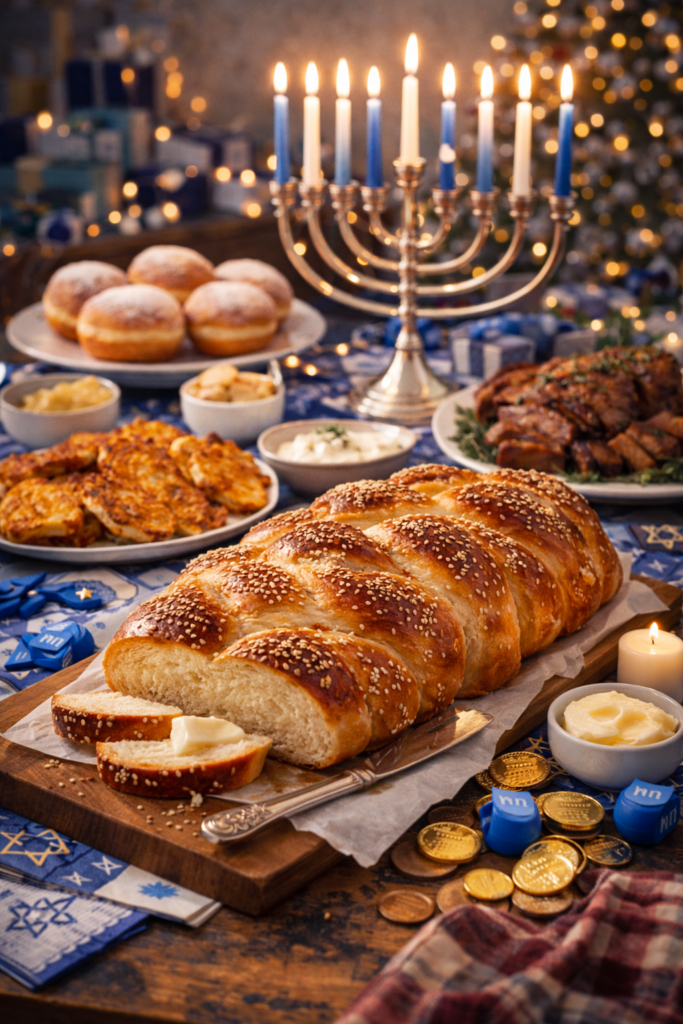
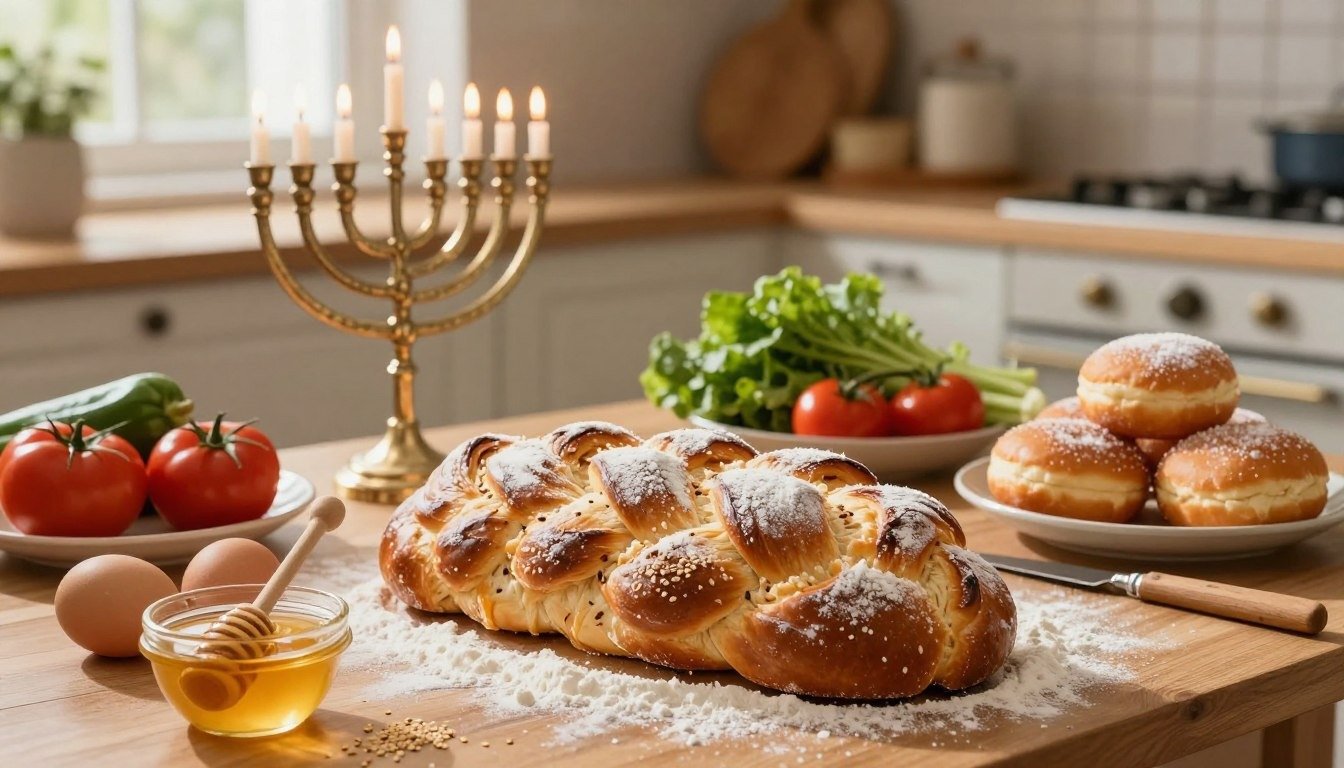
Cooking and sharing meals are a big part of the celebration. Dishes like challah are especially important. In this article, we’ll look at some tasty Hanukkah recipes, including challah bread. We’ll also give you ideas for making your holiday meals unforgettable.
Key Takeaways
- Explore traditional Hanukkah recipes that bring families together.
- Learn the art of making challah bread, a staple of Jewish holiday cooking.
- Discover new ideas for your Hanukkah celebrations.
- Get inspired by the rich flavors and traditions of Jewish cooking.
- Find simple and delicious recipes to enjoy during the holiday.
The Significance of Food in Hanukkah Celebrations
Hanukkah, the Festival of Lights, is deeply tied to food traditions. These traditions light up its history and spiritual meaning. Food is key in Hanukkah, linking the past to the present.
The Historical Context of Hanukkah Foods
The history of Hanukkah foods comes from the miracle of the oil. This oil burned for eight days. Traditional dishes, often fried in oil, remember this miracle.
Latke, or potato pancakes, and sufganiyot, jelly-filled donuts, are beloved Hanukkah treats. They have been enjoyed for generations.
These foods were more than just a celebration. They were a practical response to the Jewish community’s challenges during the Maccabean era.
Symbolic Meanings Behind Traditional Dishes
Hanukkah dishes hold deep symbolic meanings. The oil used in cooking reminds us of the miracle. The round shape of sufganiyot shows the unity of the community.
Hanukkah recipes like challah, not fried, are also important. They are made with eggs and sugar, symbolizing the holiday’s joy.
| Dish | Symbolic Meaning |
|---|---|
| Latke (Potato Pancakes) | Fried in oil, commemorating the miracle |
| Sufganiyot (Jelly-Filled Donuts) | Round shape symbolizing unity, fried in oil |
| Challah | Enriched with eggs and sugar, symbolizing joy |
Exploring Hanukkah’s food traditions shows they’re more than just food. They connect us to our heritage and community.
Essential Ingredients for Hanukkah Cooking
Exploring Hanukkah cooking reveals key ingredients for the holiday’s dishes. The right mix can elevate your Hanukkah meals to new heights.
Traditional Pantry Staples
For Hanukkah cooking, having the right pantry items is crucial. You’ll need flour, yeast, sugar, and oil. These are the backbone of classics like challah bread and sufganiyot (jelly-filled donuts).
| Ingredient | Used In |
|---|---|
| Flour | Challah, latkes |
| Yeast | Challah, sufganiyot |
| Sugar | Sufganiyot, bimuelos |
Special Ingredients for Authentic Flavors
For authentic Hanukkah tastes, special ingredients are key. Poppy seeds top challah, while potatoes are essential for latkes. A chef advises, “Choose Russet or Idaho potatoes for the best latkes.”
“The oil used for frying latkes and sufganiyot is a symbol of the miracle of Hanukkah, and it’s what gives these treats their distinctive flavor.”
Classic Challah Bread Recipe
Making Challah bread is a cherished tradition for many families during Hanukkah. This classic recipe is a favorite in Jewish homes. It’s sure to become a beloved tradition in yours too.
Ingredients and Equipment Needed
To make delicious Challah bread, you’ll need:
- 1 cup warm water
- 2 teaspoons active dry yeast
- 3 tablespoons sugar
- 4 cups all-purpose flour
- 1 teaspoon salt
- 1/4 cup vegetable oil
- 2 large eggs
- 1 egg yolk
- 1 tablespoon sesame seeds or poppy seeds (optional)
You’ll also need a large mixing bowl, a measuring cup, a wooden spoon or stand mixer, and a baking sheet lined with parchment paper.
Step-by-Step Mixing and Kneading Process
To start, mix warm water, yeast, and sugar in a small bowl. Let it sit for 5-10 minutes, until it’s frothy.
Proper Yeast Activation
Yeast activation is crucial for a light and airy Challah bread. Make sure the water is not too hot or too cold, as this can affect the yeast’s activity.
Kneading Techniques for Perfect Texture
Knead the dough for 10-15 minutes, by hand or with a stand mixer. The dough should be smooth and elastic.
Dough Rising Tips
Place the dough in a greased bowl, cover it with plastic wrap, and let it rise in a warm, draft-free place for about an hour, or until it has doubled in size.
Braiding Techniques for Beautiful Presentation
Braiding is key to making Challah bread. Here are a few techniques to try:
Traditional 3-Strand Braid
Divide the dough into three equal pieces and roll each into a long rope. Braid the ropes together, tucking the ends under the loaf.
Advanced 6-Strand Braid
For a more intricate braid, divide the dough into six equal pieces and roll each into a rope. Braid the ropes together, following a pattern of over and under.
Round Challah Variation
To make a round Challah, divide the dough into four equal pieces and roll each into a ball. Place the balls in a circle, tucking the edges under the loaf.
| Braiding Technique | Description | Difficulty Level |
| Traditional 3-Strand Braid | Simple and classic braid | Easy |
| Advanced 6-Strand Braid | Intricate and beautiful braid | Challenging |
| Round Challah Variation | Unique and festive shape | Moderate |
As you master Challah bread making, it becomes a great way to bring family and friends together during Hanukkah. With these simple steps and techniques, you’ll create a delicious and beautiful Challah bread. It will be the centerpiece of your holiday celebrations.
“The smell of freshly baked Challah bread is a surefire way to bring people together. It’s a tradition that warms the heart and fills the home with love and joy.”
Variations of Traditional Challah
Challah is amazing because it can be many things. You can make it sweet or savory. It’s perfect for Hanukkah and other celebrations.
Sweet Challah Variations
Sweet challah is a tasty twist on the classic. Here are some favorites:
Raisin and Cinnamon Challah
This version adds sweet raisins and cinnamon. It’s a mix of sweet and spicy.
Honey and Apple Challah
This challah has honey and apple. It’s sweet and fruity.
Chocolate Chip Challah
Chocolate lovers will love this. It has dark or semi-sweet chocolate chips.
| Sweet Variation | Key Ingredients | Flavor Profile |
|---|---|---|
| Raisin and Cinnamon | Raisins, Cinnamon | Sweet, Spicy |
| Honey and Apple | Honey, Apple | Fruity, Sweet |
| Chocolate Chip | Dark/Semi-sweet Chocolate Chips | Rich, Chocolatey |
Savory Challah Options
Savory challah is great for those who don’t like it too sweet. Here are some tasty options:
Garlic and Herb Challah
This challah has garlic and herbs like rosemary or thyme. It’s savory and aromatic.
Onion and Poppy Seed Challah
It has caramelized onions and poppy seeds. It tastes deep and savory.
Za’atar Challah
Za’atar, a Middle Eastern herb mix, is used in this challah. It has a unique herby flavor.

Challah can be many things, making it great for any occasion. Whether you like it sweet or savory, there’s a challah for you.
Hanukkah Recipes Like Challah and Other Traditional Foods
During Hanukkah, our tables are filled with tasty foods. Challah is a key part, connecting us to our heritage and each other. It’s often at the center of our celebrations.
The Connection Between Challah and Other Festive Breads
Challah and other festive breads are made with love and care. They use traditional recipes passed down through generations. Challah is a symbol of unity and joy, like other Hanukkah breads.
Bimuelos, or Hanukkah fritters, are sweet treats that bring families together. These breads connect us through community and tradition.
Making these breads helps us preserve our cultural heritage. As we knead and shape the dough, we remember the love and care in every Hanukkah recipe. This strengthens family bonds and creates new memories.
How to Incorporate Challah in Your Hanukkah Menu
Adding challah to your Hanukkah menu is easy and fun. You can serve it as is or use it in other dishes. For example, challah makes great French toast for Hanukkah breakfast or brunch.
Just slice the challah, dip it in eggs and milk, and cook until golden. It’s a delicious start to your day.
Another idea is to make Hanukkah croutons from challah. Cube the bread, toss with olive oil and seasonings, and bake until crispy. It adds a delightful crunch and a touch of tradition to your meal.
Rabbi Yehuda Levin once said,
“The table is the altar, and the food is the sacrifice.”
This quote highlights the role of food in our celebrations and traditions.
Crispy Potato Latkes Recipe
Hanukkah wouldn’t be the same without the delicious taste of crispy latkes. They are a traditional dish that connects us to Jewish heritage and history.
Traditional vs. Modern Latke Preparation
Traditionally, latkes were made with potatoes, onions, and oil. Today, recipes may add more flavors. But the core remains the same. The secret to crispy latkes is in how you prepare them, like grating potatoes and removing moisture.
Step-by-Step Cooking Instructions
Making latkes requires a few key steps. First, grate the potatoes and onions. You can use a traditional grater or a food processor with a shredding attachment.
Grating vs. Food Processor Methods
Using a food processor saves time, but grating by hand gives a better texture. Pick the method that suits you best.
Removing Excess Moisture
After grating, remove as much moisture as you can from the potatoes. This step is key for crispy latkes.
Frying Techniques for Crispy Results
Heat a lot of oil in a deep frying pan. When it’s hot, add the potato mixture in small batches. Flatten them slightly. Fry until they’re golden brown and crispy. Then, drain on paper towels.

Serving Suggestions and Accompaniments
Latkes are best served hot, often with sour cream or applesauce. You can also try toppings like smoked salmon or crème fraîche. Latkes are sure to be a hit at Hanukkah.
By following these steps and tips, you’ll make delicious, crispy latkes. They’ll be the highlight of your Hanukkah celebration.
Sufganiyot: Jelly-Filled Hanukkah Donuts
Jelly-filled donuts, known as sufganiyot in Hebrew, are a delicious Hanukkah dessert. They are a staple in many Jewish households. These sweet treats are not only a delight to eat but also carry significant cultural and religious meaning during the Hanukkah celebrations.
Dough Preparation and Rising Tips
To make sufganiyot, start with the right dough. Use a yeast-based dough for a light and airy texture. Make sure the yeast is activated properly by using warm ingredients and letting the dough rise enough.
A good rule of thumb is to let the dough rise until it has doubled in size.
Frying Techniques for Perfect Donuts
Frying sufganiyot requires precision. Heat the oil to the right temperature (around 375°F), and fry the donuts until they are golden. It’s essential to not overcrowd the pot to maintain the oil temperature.
Filling and Decorating Ideas
Once the donuts are fried and cooled slightly, it’s time to fill and decorate them. Traditional fillings include jam or jelly, but modern variations offer a range of creative options.
Traditional Jelly Fillings
Classic strawberry or raspberry jelly fillings are traditional favorites. They provide a sweet contrast to the fried dough.
Modern Filling Variations
For a twist, consider fillings like chocolate ganache, Nutella, or even lemon curd. These modern variations can add a unique flavor profile to your sufganiyot.
Decorative Toppings and Presentation
After filling, sufganiyot can be topped with powdered sugar, cinnamon, or even a glaze. The presentation can be enhanced by using creative toppings that match the occasion or the recipient’s preferences.
| Filling Type | Description | Topping Suggestions |
|---|---|---|
| Traditional Jelly | Strawberry or raspberry jelly | Powdered sugar |
| Chocolate Ganache | Rich chocolate filling | Chocolate sprinkles |
| Lemon Curd | Tangy lemon filling | Lemon zest |
Making sufganiyot is a fun and rewarding process. It can be enjoyed with family and friends during Hanukkah. Experimenting with different fillings and toppings can make this traditional dessert even more special.
Making Hanukkah Recipes a Family Tradition
Cooking Hanukkah recipes together as a family keeps cultural heritage alive. It also makes new memories. It’s a great way to get kids involved and teach them about the Festival of Lights.
Cooking with Children: Kid-Friendly Tasks
Getting kids to help with Hanukkah cooking is fun and educational. They can start by mixing dough for challah or sufganiyot (jelly-filled donuts). They can also measure ingredients, stir, and even fry latkes with adult help.
These tasks teach kids about cooking and the stories behind Hanukkah foods. It’s a way to share traditions and history.
Passing Down Family Recipes Through Generations
Hanukkah recipes connect us to our family’s past. To keep this tradition, we should write down our family recipes and the stories they tell. A family cookbook or video tutorials can help.
By sharing these recipes with younger family members, we keep traditions alive. It strengthens family bonds and preserves our cultural heritage. It’s a meaningful way to celebrate Hanukkah and share cherished memories with future generations.
Brisket and Other Main Dishes for Your Hanukkah Feast
A Hanukkah feast isn’t complete without a delicious main dish. It’s what makes the celebration special. It’s a key part that everyone looks forward to.
Slow-Cooked Brisket Recipe
A slow-cooked brisket is a classic Hanukkah choice. It’s tender and full of flavor. You’ll need a 5-pound beef brisket, 1 onion, 3 cloves of garlic, 1 cup of beef broth, and 1 tablespoon of brown sugar.
Slow cooking the brisket at 300°F for about 3 hours makes it tender and juicy. As Bon Appétit says, “A good brisket is all about the sauce and the slow cooking.” Serve it with mashed potatoes or roasted vegetables for a complete meal.
Alternative Main Dishes for Your Hanukkah Table
While brisket is a favorite, there are other tasty alternative main courses for Hanukkah. Roasted chicken, salmon, or a vegetarian quinoa bowl can add variety. For a twist, try a brisket recipe with Korean-style BBQ sauce or a Mediterranean herb crust.
According to a quote from
“The Jewish Cookbook” by Claudia Roden, ‘Food is a central part of Jewish celebrations, and the main course is often the highlight of the meal.’
Choose something that will bring everyone together. It’s about sharing a special meal with your loved ones.
Conclusion: Celebrating the Festival of Lights Through Food
Food is key in Hanukkah celebrations. The Festival of Lights brings families and friends together with traditional dishes. Recipes like challah, latkes, and sufganiyot are more than food; they represent the holiday’s miracle and joy.
Adding Hanukkah food traditions to your celebration can make it more meaningful. Whether you’re baking classic challah or trying new recipes, cooking and sharing meals with loved ones is special. It connects you to the holiday’s spirit.
When you sit down at the table this Hanukkah, think about the history and meaning behind the dishes. Embracing these traditions lets you enjoy the season’s flavors and honor your heritage and community. This makes Hanukkah truly special.
FAQ
What are some traditional Hanukkah recipes like challah?
Traditional Hanukkah recipes include challah, sufganiyot (jelly-filled donuts), and bimuelos (fritters). You’ll also find latkes and brisket on the menu.
Can I make challah without a stand mixer?
Yes, you can make challah by hand. It might take more effort, but you can still get great results.
What are some variations of traditional challah bread?
You can try sweet challah with raisins or chocolate chips. Or go for savory challah with garlic or herbs. There are also different braiding patterns, like a round challah or a 6-strand braid.
How do I store leftover challah?
Wrap leftover challah tightly in plastic wrap or foil. Keep it at room temperature for up to 3 days. Or freeze it for up to 2 months.
Can I make latkes ahead of time?
Latkes are best fresh, but you can prep the potato mixture ahead. Store it in the fridge for up to a day. Fry the latkes just before serving.
What are some kid-friendly tasks for involving children in Hanukkah cooking?
Kids can help by mixing, stirring, and sprinkling toppings. They can also crack eggs or wash veggies.
How do I pass down family Hanukkah recipes through generations?
Write down the recipes and share stories and memories. Teach children and younger family members the cooking techniques and traditions.