There are moments in football that don’t just live in highlight reels — they live in your memory, in your heartbeat, in the way you describe them to someone who wasn’t there. Mexico’s opening match of FIFA World Cup 2026 at the legendary Azteca Stadium was one of those moments. A 2–0 victory on home soil, in front of thousands of roaring fans, against the backdrop of one of football’s most storied venues.
If you felt something watching it, you weren’t alone. The whole world did.
Before We Talk About the Match — Can We Talk About Azteca?
To truly appreciate what happened that night, you have to understand what Azteca Stadium means. Not just as a football ground, but as a symbol.
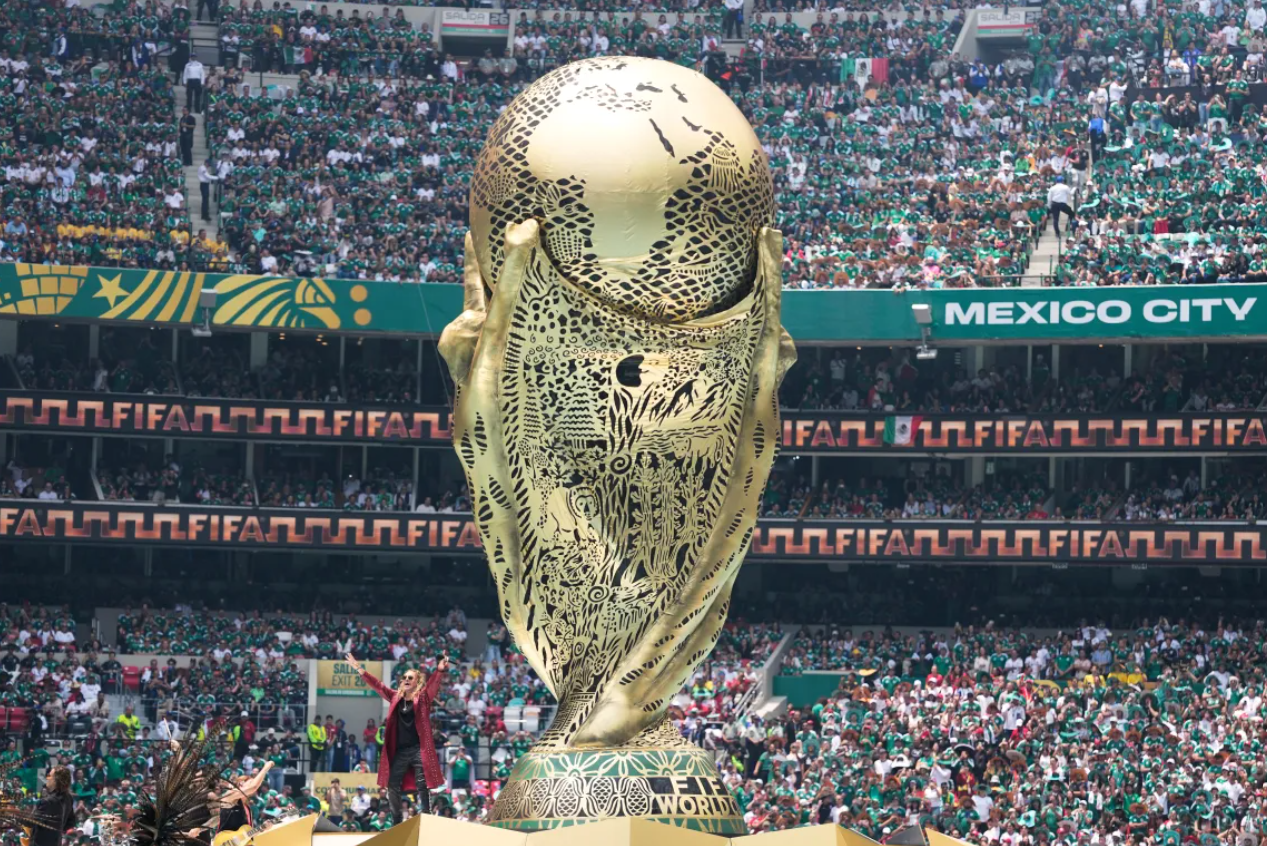
Built in 1966 and nestled in the heart of Mexico City, Azteca is the only stadium in the world to have hosted two FIFA World Cup finals — 1970 and 1986. It witnessed Diego Maradona’s infamous Hand of God goal and his equally legendary solo run that is widely considered the greatest goal ever scored. It has seen Brazil lift trophies, witnessed upsets that shook the planet, and absorbed decades of football history into its concrete bones.
Walking into Azteca isn’t just walking into a stadium. It’s walking into a living museum of the beautiful game.
So when FIFA World Cup 2026 handed Mexico the honor of playing their opening match there, it wasn’t just a scheduling decision — it was a gift. A deeply emotional, deeply meaningful gift to a nation that bleeds football.
The Build-Up: A Country Holding Its Breath
In the days leading up to the match, Mexico City had a feeling you could almost touch. Flags hung from balconies. Green, white, and red painted every corner. Street vendors sold jerseys faster than they could stock them. Schools buzzed with predictions. Families planned viewing parties. The entire country was operating on a low hum of nervous, joyful anticipation.
For Mexico, hosting the World Cup — alongside the United States and Canada — was already historic. But hosting it and playing well in it? That was the dream. And dreams, as anyone who follows Mexican football knows, can be complicated.
Mexico had arrived at this tournament with renewed confidence. A squad that blended youth and experience, pace and intelligence, creativity and discipline. Fans were cautiously optimistic, the way football fans always are — believing deeply while also preparing, just a little, for heartbreak.
That night at Azteca, though, there was no heartbreak. Only magic.
Kickoff: Mexico Means Business
From the very first whistle, it was clear this Mexican side had come prepared. There was no nervousness, no stage fright, no heavy feet from the weight of expectation. Instead, there was sharpness — a collective urgency to dominate from minute one.
The midfield was the engine room. Quick passing, smart movement, the kind of fluid combination play that makes football look effortless even when you know it isn’t. Mexico pressed high, pressed early, and made life uncomfortable for the opposition right from the start.
The crowd responded immediately. Every successful press earned a roar. Every recovered ball brought the stands to life. And every time Mexico moved forward, 80,000-plus voices rose together in a wave of sound that must have felt like a physical force.
There’s a reason home advantage is real in football — and Azteca, on a night like this, is one of the most intense home advantages on the planet.
The First Goal: And the Roof Came Off
It was only a matter of time. Mexico had been probing, building, and pushing — and eventually, the combination of pressure and quality paid off.
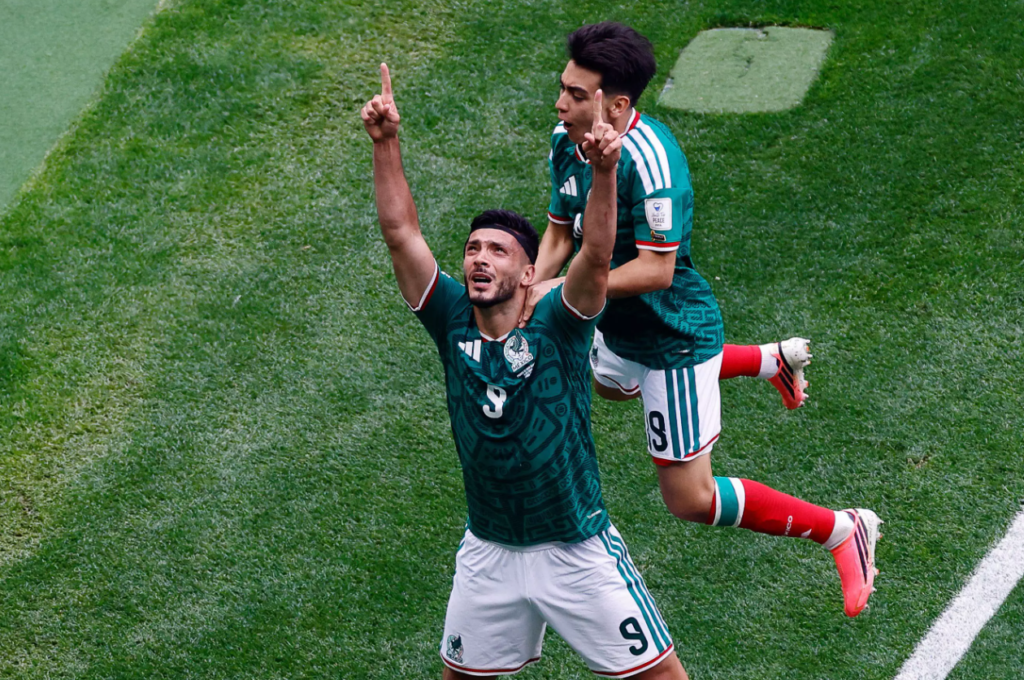
A well-constructed attacking move opened up space in the opposition’s defensive line. The pass was precise, the run was perfectly timed, and the finish was composed. The ball hit the back of the net and Azteca simply exploded.
Players sprinted to celebrate, arms wide, faces lit with pure relief and joy. In the stands, strangers hugged each other. Tears appeared on the faces of fans who had waited years — decades, even — for a moment like this. To be at Azteca, at a World Cup, watching Mexico score.
It was more than a goal. It was the release of a nation’s held breath.
The psychological impact was immediate too. Mexico grew in confidence. Their passing became bolder, their movement more creative, their press even more intense. The opposition, meanwhile, had to rethink everything — they needed to score at least once now, which meant opening up, which meant more space for Mexico to exploit.
The Second Half: No Let-Up, No Mercy
A lesser team might have been tempted to sit on the lead. To protect, to absorb, to let the clock do the work. But this Mexico side had a different mindset. They came out for the second half with the same intensity, the same hunger, the same collective will to perform.
The midfield continued to dominate. The wide players continued to stretch the play. And when the second goal arrived — another well-crafted team move finished with clinical precision — it felt like justice. Like the scoreline finally matching the performance.
2–0. The stadium reached a new level of noise that most sound engineers probably couldn’t measure accurately.
From that point, Mexico managed the game with composure and intelligence. There was no panic, no unnecessary risk. Just controlled, confident football from a team that knew it had done its job — and done it well.
The Fans: Because Without Them, It’s Just a Game
Let’s pause here and give credit where it is very much due — the fans of Mexico at Azteca that night were extraordinary.
From the pre-match singing to the final whistle, the support was relentless. The atmosphere was the kind that makes international football so uniquely powerful. It wasn’t manufactured hype or piped-in noise — it was 80,000 people genuinely, deeply invested in every moment of the match.
Mexican football culture has always placed the supporter at the center of the experience. The chants, the choreography, the passion in the stands — it’s all part of a tradition passed down through generations. Grandparents who watched the 1970 World Cup at this very stadium. Parents who cried at 1986. Children experiencing their first World Cup live, right here, right now.
That continuity of passion — that generational love for football — was visible in every corner of Azteca that night. And the players clearly felt it. Several spoke afterward about the incredible energy flowing from the stands, about how the crowd carried them through difficult moments and lifted them when they needed it most.
Football, at its finest, is a conversation between the players on the pitch and the supporters in the stands. At Azteca on this night, that conversation was beautiful.
What This Win Means for Mexico’s World Cup Journey
In tournament football, momentum is everything. And Mexico, with this opening victory, has momentum in abundance.
A 2–0 win in your first match does several things simultaneously. It earns three crucial points. It boosts confidence within the squad. It sends a message to every other team in the tournament. And perhaps most importantly, it gives the fans permission to dream — properly, fully, without holding back.
Mexico has historically been a round-of-16 fixture at World Cups, often bowing out in heartbreaking circumstances. But this generation of players has spoken openly about wanting to change that narrative. About going further. About believing that they can compete with the very best in the world.
A dominant 2–0 home victory in a World Cup opener is exactly the kind of statement that backs up that belief with evidence. It says: we are ready. We are here. And we are not just participating — we are competing.
The Historic Weight of This Moment
There is something genuinely special about Mexico hosting the World Cup in 2026 — and not just for football reasons.
The FIFA World Cup being held across three North American nations simultaneously is an unprecedented logistical and sporting achievement. For Mexico, it is also deeply personal. The World Cup has roots in this soil. The memories are embedded here — in Azteca’s walls, in the streets of Mexico City, in the stories told by grandparents to grandchildren.
Playing the opener at Azteca wasn’t just a football match. It was a reaffirmation of Mexico’s relationship with the sport that defines so much of its cultural identity. A reminder that football in Mexico isn’t a hobby — it’s a heartbeat.
For the players who wore the green jersey that night, the responsibility was immense. And they carried it beautifully.
Looking Ahead: The Journey Has Just Begun
Of course, one match is one match. The road through a World Cup is long, unpredictable, and filled with moments that can shift everything in an instant. Mexico knows this better than most.
But right now, in this moment, everything feels possible. The team is performing. The fans are energized. The stadium is on their side. And the spirit — that intangible, impossible-to-manufacture spirit — is very much alive.
The next matches will bring different challenges, different opponents, different pressures. But Mexico goes into them with confidence, with momentum, and with the memory of that extraordinary Azteca night to draw on when things get difficult.
Final Thoughts: This Is Why We Love Football
If you’re reading this and you watched that match, you don’t need us to tell you how special it was. You felt it.
And if you didn’t catch it live — find the highlights. Watch the goals. But more than that, watch the fans. Watch the faces in the stands when the first goal goes in. Watch the players sprint to celebrate together. Watch an entire nation, for one night, unified by something as simple and as profound as a football match.
That’s what the World Cup is. Not just a tournament. Not just a trophy. But a reminder, every four years, of why sport matters. Of what it means to represent something bigger than yourself. Of the joy that comes from watching people who believe — truly, deeply believe — in what they’re doing.
Mexico believed that night at Azteca. And because they believed, so did the rest of us.
Here’s to the journey ahead. Come on, Mexico.