Let’s be honest. When you sit down to watch a World Cup opener, you’re expecting goals, celebrations, and the kind of football that reminds you why you fell in love with the sport in the first place.
What you’re not expecting is three red cards, a match that spirals into chaos, and a referee who ends up being more talked about than any of the players on the pitch.
And yet — that’s exactly what happened when Mexico faced South Africa in one of the most controversial opening fixtures in recent World Cup memory. Mexico won 2–0, yes. But the scoreline was almost beside the point by the time the final whistle blew. The real story of the night was the officiating. And the debate it sparked? It’s still going.
So let’s get into it. Was the referee right — or did he completely miss the moment?
First, Let’s Set the Scene
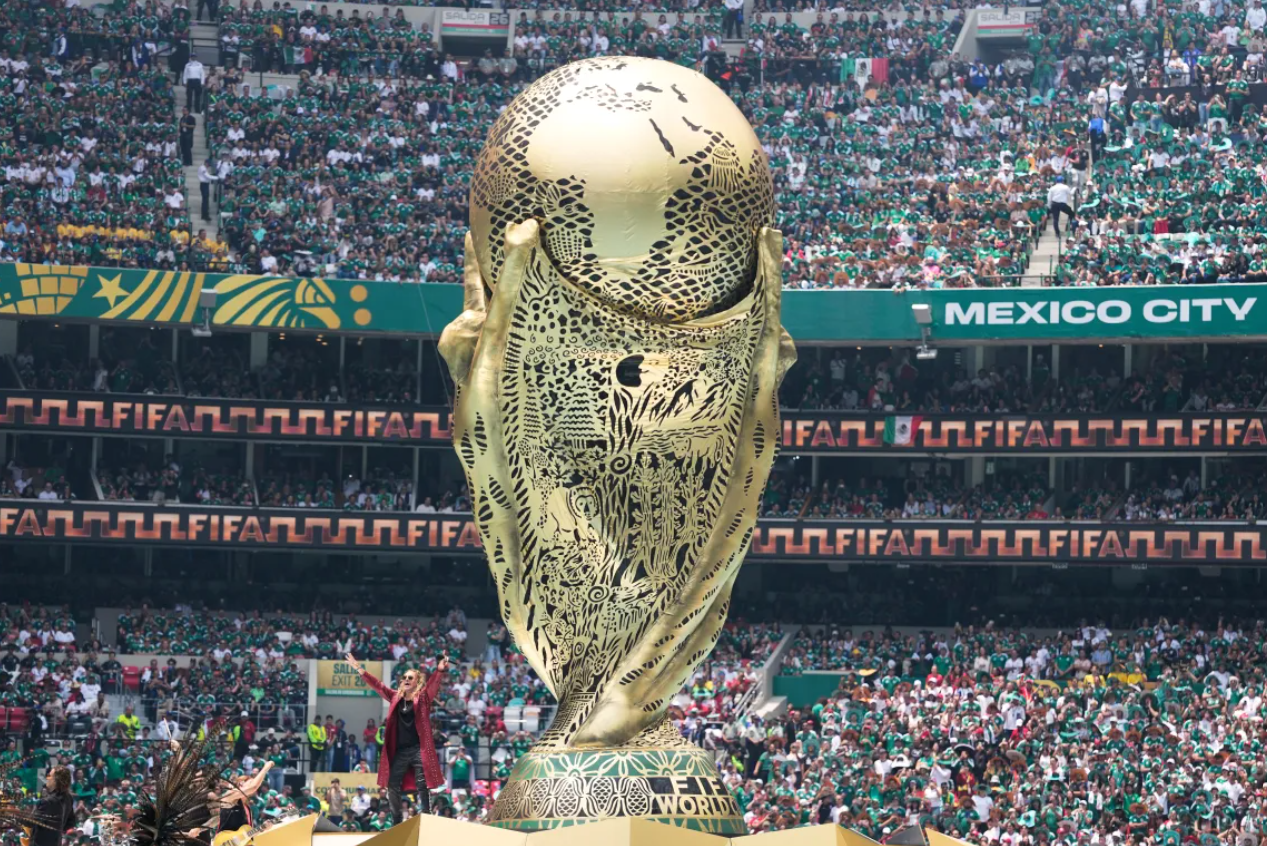
There is nothing quite like a World Cup opening match. The anticipation, the ceremony, the knowledge that billions of eyes around the world are watching. For the players, it’s the culmination of years of preparation. For the fans, it’s the moment the tournament finally feels real.
Mexico and South Africa walked out onto that pitch carrying all of that weight. Both teams were eager, both were aggressive, and both wanted to make an immediate statement in the group stage. The atmosphere was electric — exactly what a World Cup opener should be.
For a while, it delivered. Two competitive sides, physical but purposeful, testing each other out in the way you’d expect from a high-stakes tournament match.
And then things started to unravel.
Red Card Number One: Justified or Overcautious?
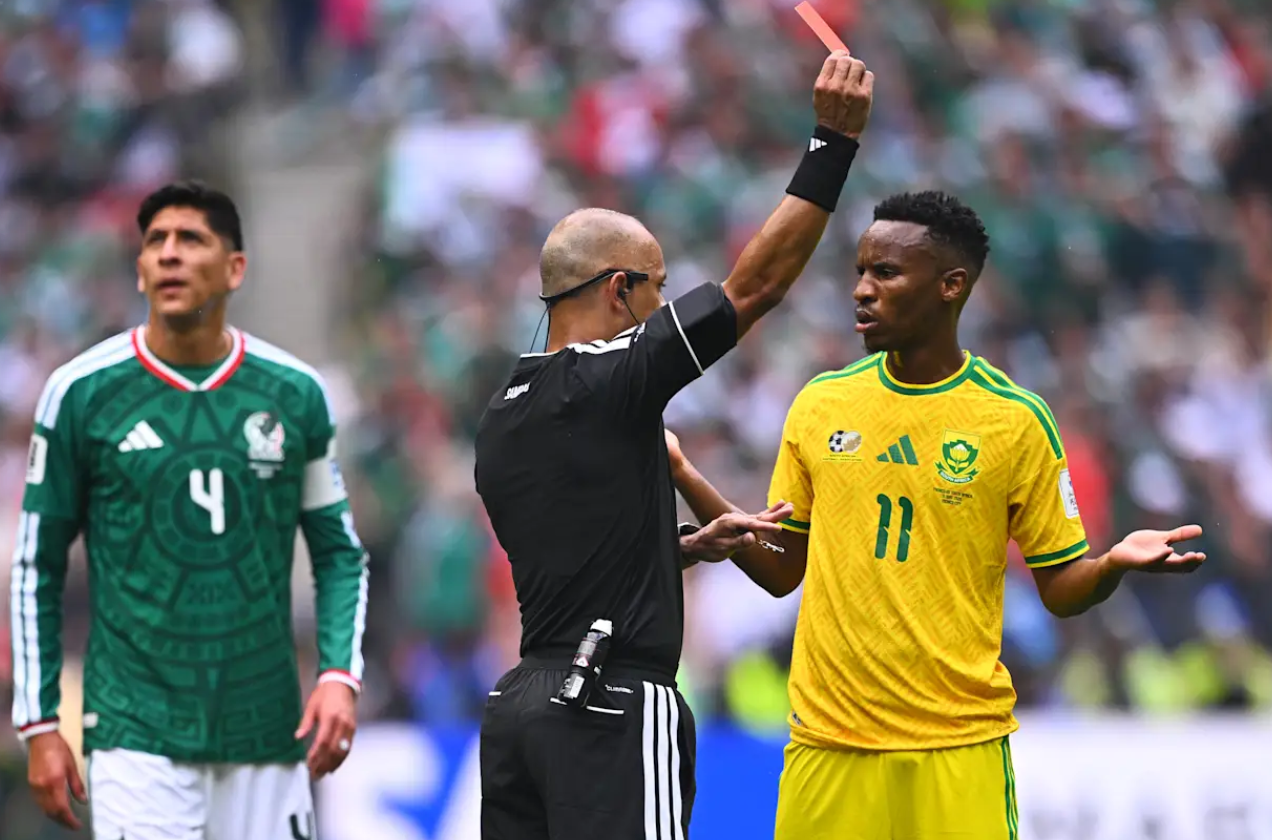
The first dismissal arrived after a challenge that the referee immediately flagged as serious foul play. No hesitation — straight red.
Now, here’s where it gets interesting. Because depending on who you ask, you’ll get completely different answers about whether that decision was correct.
The people defending the referee make a fair point: player safety is non-negotiable. Modern football has moved firmly in the direction of protecting players from dangerous tackles, and referees are instructed to act decisively when they see challenges that could cause injury. If the tackle was reckless and endangered the opponent, the referee had no choice.
The critics, though, have a point too. A World Cup opener is not the moment for hair-trigger decisions. The context matters. A yellow card — a warning, a message — might have achieved the same outcome without fundamentally altering the match. Once a red card goes up on opening night, the game changes completely. The tension spikes, the players get nervous, and the referee suddenly becomes the story.
And that’s exactly what happened.
The Match Starts Falling Apart
Here’s the thing about red cards — they rarely calm a football match down. What they usually do is create more tension, not less.
After the first dismissal, the atmosphere on the pitch shifted. Players began protesting every decision. Both benches were up and animated. Every tackle was followed by appeals, arguments, and the kind of needle that can quickly tip over into something uglier.
The football that everyone had tuned in for started taking a backseat. Instead of talking about chances and tactics and the quality of play, the conversation was entirely about the referee. His positioning. His consistency. Whether he was managing the game or inflaming it.
And then — the second red card.
Another dismissal. Another round of arguments. Another moment that left fans at home either nodding in approval or throwing things at their television screens.
Three Red Cards. Three.
If two wasn’t dramatic enough — and it really was — the third red card arrived late in the match and effectively ended any remaining pretense that this was a normal football game.
With reduced numbers, the affected team had almost no tactical options left. Chasing the game with fewer players, limited energy, and a referee who had already shown he wasn’t in the mood for leniency — it was an almost impossible situation.
Mexico, to their credit, handled the chaos professionally. They kept their composure, controlled possession, and took their chances when they came. The 2–0 scoreline was a reflection of their quality and their discipline in a match that could easily have dragged them into the controversy too.
But here’s the question that nobody could stop asking by the end of the night: did those three red cards need to happen? Or did the referee’s handling of the situation actually create the chaos rather than prevent it?
Let’s Be Fair: The Laws of the Game Are Clear
Before we come down too hard on the referee, let’s acknowledge something important. He has a job to do. And that job is defined by rules that don’t change based on the occasion.
The Laws of the Game are clear about when a red card must be shown. Serious foul play. Violent conduct. Denying an obvious goal-scoring opportunity. Offensive or abusive language. A second bookable offense. These aren’t grey areas — they’re specific criteria that referees are trained to apply consistently.
If the three incidents that led to dismissals in this match genuinely met those criteria, then the referee was right. Full stop. The World Cup stage doesn’t grant players immunity from the rules. In fact, you could argue it demands stricter adherence to them, because the entire world is watching.
Courage is actually underrated in officiating. Making unpopular calls in a packed stadium, on opening night of a World Cup, with millions watching — that takes a certain kind of nerve. If those decisions were correct, the referee deserves credit for not shying away from them.
But Here’s Where the Criticism Becomes Hard to Ignore
The counter-argument, though, is not just about whether the individual decisions were technically correct. It’s about something broader — match management.
Great referees don’t just enforce the laws. They read the game. They sense when tension is building and find ways to defuse it before it explodes. An early word with a captain. A deliberate pause in play. A yellow card that sends a clear message without removing a player from the match. These are tools that experienced officials use to keep games under control while preserving the spectacle.
Critics of the referee’s performance argue that a more proactive approach — stronger communication earlier, more effective use of the yellow card as a warning — might have prevented the situation from escalating to three red cards. That instead of managing the match, the referee let it manage him.
And there’s a specific opening-night argument worth making too. This was the first match of a tournament that billions of people were tuning in for. Football fans around the world — including fans who don’t follow the sport obsessively but come alive for the World Cup every four years — were sitting down to enjoy the show. Three red cards didn’t just affect the result. They affected the experience. They turned what should have been a joyful celebration of football into a controversy-heavy, stop-start spectacle that left many viewers frustrated.
For the letter of the law versus the spirit of the occasion — which matters more? That’s genuinely a hard question.
The Internet, Predictably, Had Opinions
Social media in the aftermath of this match was a lot.
One side was firm: the referee was right to enforce the rules without fear or favour. Football needs officials who aren’t intimidated by the occasion. Player safety matters. Discipline matters. If players make bad decisions, they face consequences — World Cup or not.
The other side was equally firm: the referee cost both teams the match they deserved to play. He became the story when the players should have been. His decisions, whatever their technical justification, robbed the opening night of its magic.
What was fascinating was how evenly divided the debate was. Usually in these situations, one side clearly has the better of the argument. Here? It was genuinely 50/50. Which tells you something important about just how complex and subjective football officiating can be — especially on the biggest stages.
What This Means Going Forward
There’s a practical dimension to this debate too, beyond the drama of one match.
Referees for the remaining World Cup fixtures will have watched this game very carefully. The question of how to handle physical, high-intensity matches — when to be firm, when to manage, when to let things go — will be on every official’s mind as the tournament progresses.
Players and coaches will have taken note too. The message from the opening night, if nothing else, was clear: the referee at this World Cup is not going to look the other way. Discipline matters. Respect for decisions matters.
Whether that leads to cleaner, better-managed games going forward — or to more controversy as teams and officials navigate the fine line between competitive football and reckless play — remains to be seen.
So — Was the Referee Right?
Here’s our honest take.
Technically? Probably yes — or at least, within the bounds of what the laws allow. If the challenges met the criteria for red cards, the referee was doing his job.
But football is emotional, contextual, and human. And on opening night of the biggest sporting event on the planet, the referee’s inability to manage the game’s temperature before it boiled over feels like a missed opportunity. Great officiating is invisible — it keeps the game flowing without anyone noticing you’re there. This was the opposite of that.
Three red cards. Opening night. The debate will run all the way to the final.
And honestly? That’s very, very football.
Final Thought
Mexico vs South Africa will not be remembered as a beautiful game of football. It won’t be remembered for a stunning goal or a brilliant tactical battle. It’ll be remembered for controversy, chaos, and a referee who divided opinion like few officials ever have on this stage.
But here’s the silver lining — if you can call it that. It got people talking. It got people passionate. And passion, at the end of the day, is what the World Cup is all about.
Even when it comes wrapped in three red cards and a whole lot of drama.